Treating Athlete’s Foot

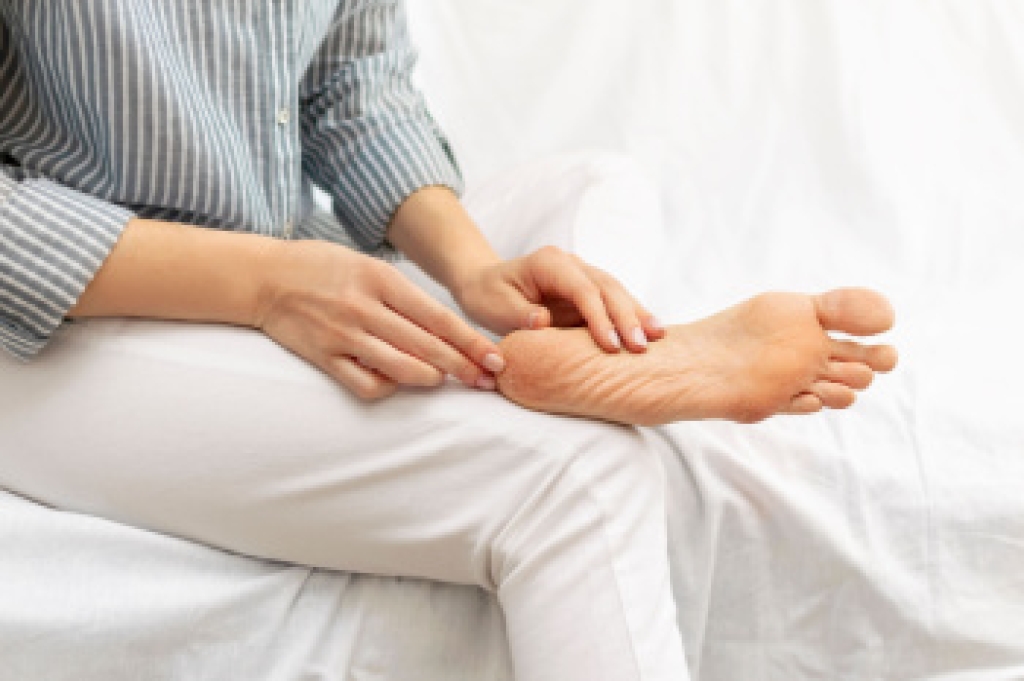
Athlete’s foot is a fungal infection that affects the skin on the feet. It is often caused by exposure to fungi found in warm, moist environments, such as public showers, locker rooms, or sweaty shoes. It may look like red, scaly patches, peeling skin, or small blisters, often appearing between the toes or on the soles of the feet. Many individuals experience itching, burning, or stinging sensations, and in severe cases the skin may crack or bleed, increasing the risk of a secondary infection. Athlete’s foot is highly contagious and can spread to other parts of the body or to other individuals through direct contact or shared surfaces. A podiatrist can help by examining the affected areas to confirm the diagnosis and rule out other skin conditions. Treatment may include topical or oral antifungal medications, proper foot hygiene, and advice on footwear to reduce moisture and prevent recurrence. Early intervention relieves discomfort and helps stop the spread of infection. If you notice persistent itching, redness, or peeling on your feet, it is suggested that you make an appointment with a podiatrist.

Athlete’s Foot

Athlete’s foot is often an uncomfortable condition to experience. Thankfully, podiatrists specialize in treating athlete’s foot and offer the best treatment options. If you have any questions about athlete’s foot, consult with Mohammad R. Parsa, DPM from Madison Foot Clinic. our doctor will assess your condition and provide you with quality treatment.

What Is Athlete’s Foot?

Tinea pedis, more commonly known as athlete’s foot, is a non-serious and common fungal infection of the foot. Athlete’s foot is contagious and can be contracted by touching someone who has it or infected surfaces. The most common places contaminated by it are public showers, locker rooms, and swimming pools. Once contracted, it grows on feet that are left inside moist, dark, and warm shoes and socks.

Prevention

The most effective ways to prevent athlete’s foot include:

  • Thoroughly washing and drying feet
  • Avoid going barefoot in locker rooms and public showers
  • Using shower shoes in public showers
  • Wearing socks that allow the feet to breathe
  • Changing socks and shoes frequently if you sweat a lot

Symptoms

Athlete’s foot initially occurs as a rash between the toes. However, if left undiagnosed, it can spread to the sides and bottom of the feet, toenails, and if touched by hand, the hands themselves. Symptoms include:

  • Redness
  • Burning
  • Itching
  • Scaly and peeling skin

Diagnosis and Treatment

Diagnosis is quick and easy. Skin samples will be taken and either viewed under a microscope or sent to a lab for testing. Sometimes, a podiatrist can diagnose it based on simply looking at it. Once confirmed, treatment options include oral and topical antifungal medications.

If you have any questions, please feel free to contact our office located in Madison, MS . We offer the newest diagnostic and treatment technologies for all your foot care needs.

Read more about How to Deal with Athlete's Foot

What Is Proprioception and Why Is It Important?

Proprioception is the body’s ability to sense movement and position, allowing the feet and ankles to adjust instantly to changes in terrain. Proprioception plays a key role in balance, coordination, and injury prevention. Nerve endings in the feet, tendons, and joints send signals to the brain that help control movement and stability, especially when walking or running on uneven ground. When proprioception is impaired by injury, aging, or disease, it can affect balance and agility, raising the risk of sprains or falls. Exercises that improve proprioception, such as balancing on one leg or standing on uneven surfaces, can help strengthen the muscles of the feet and enhance stability. A podiatrist can evaluate proprioceptive function and recommend strengthening routines to help restore control and balance. If you are experiencing balance or stability problems, it is suggested that you make an appointment with a podiatrist for a diagnosis and treatment.

If you have any concerns about your feet, contact Mohammad R. Parsa, DPM from Madison Foot Clinic. our doctor can provide the care you need to keep you pain-free and on your feet.

Biomechanics in Podiatry

Podiatric biomechanics is a particular sector of specialty podiatry with licensed practitioners who are trained to diagnose and treat conditions affecting the foot, ankle and lower leg. Biomechanics deals with the forces that act against the body, causing an interference with the biological structures. It focuses on the movement of the ankle, the foot and the forces that interact with them.

A History of Biomechanics

  • Biomechanics dates back to the BC era in Egypt where evidence of professional foot care has been recorded.
  • In 1974, biomechanics gained a higher profile from the studies of Merton Root, who claimed that by changing or controlling the forces between the ankle and the foot, corrections or conditions could be implemented to gain strength and coordination in the area.

Modern technological improvements are based on past theories and therapeutic processes that provide a better understanding of podiatric concepts for biomechanics. Computers can provide accurate information about the forces and patterns of the feet and lower legs.

Understanding biomechanics of the feet can help improve and eliminate pain, stopping further stress to the foot.

If you have any questions please feel free to contact our office located in Madison, MS . We offer the newest diagnostic and treatment technologies for all your foot and ankle needs.

Read more about The Importance of Biomechanics in Podiatry

Understanding Hammertoes

Hammertoe is a foot deformity where one or more toes bend abnormally at the middle joint, causing them to resemble a hammer. It can develop from wearing tight or ill-fitting shoes, muscle imbalance, arthritis, or injury. Symptoms include pain when wearing shoes, swelling, or corns or calluses on the affected toe. The toe may feel stiff or rigid, making it difficult to straighten or move comfortably. Hammertoe can start as a mild problem but may become more painful and limit movement over time. A podiatrist can diagnose hammertoe through a physical examination and imaging if necessary. Treatment options include wearing roomier shoes, using custom orthotics, targeted exercises, and toe splints. In more severe cases, minor surgery may be recommended to realign the toe. If you have a troublesome hammertoe, it is suggested that you make an appointment with a podiatrist to discuss the best treatment plan for your specific needs.

Hammertoe

Hammertoes can be a painful condition to live with. For more information, contact Mohammad R. Parsa, DPM from Madison Foot Clinic. our doctor will answer any of your foot- and ankle-related questions.

Hammertoe is a foot deformity that affects the joints of the second, third, fourth, or fifth toes of your feet. It is a painful foot condition in which these toes curl and arch up, which can often lead to pain when wearing footwear.

Symptoms

  • Pain in the affected toes
  • Development of corns or calluses due to friction
  • Inflammation
  • Redness
  • Contracture of the toes

Causes

Genetics – People who are genetically predisposed to hammertoe are often more susceptible

Arthritis – Because arthritis affects the joints in your toes, further deformities stemming from arthritis can occur

Trauma – Direct trauma to the toes could potentially lead to hammertoe

Ill-fitting shoes – Undue pressure on the front of the toes from ill-fitting shoes can potentially lead to the development of hammertoe

Treatment

Orthotics – Custom made inserts can be used to help relieve pressure placed on the toes and therefore relieve some of the pain associated with it

Medications – Oral medications such as anti-inflammatories or NSAIDs could be used to treat the pain and inflammation hammertoes causes. Injections of corticosteroids are also sometimes used

Surgery – In more severe cases where the hammertoes have become more rigid, foot surgery is a potential option

If you have any questions, please feel free to contact our office located in Madison, MS . We offer the newest diagnostic and treatment technologies for all your foot care needs.

Read more about What Are Hammertoes?

Why High Heels Can Harm Your Feet

High heels can create many problems for the feet because they force them into an unnatural position. Wearing heels changes the walking pattern and places excessive pressure on the ball of the foot, which can lead to pain, calluses, and inflammation. The raised heel also alters normal gait and can strain the ankles, knees, and lower back. Over time, these changes may contribute to bunions, hammertoes, or tendon issues. A podiatrist can assess the effects of high heel use, provide guidance on safer footwear choices, and offer treatments to relieve discomfort and prevent long-term damage. If you have foot pain from wearing high heels, it is suggested that you consult a podiatrist who can treat various foot conditions and guide you on more appropriate shoes to wear to protect your foot health.

High heels have a history of causing foot and ankle problems. If you have any concerns about your feet or ankles, contact Mohammad R. Parsa, DPM from Madison Foot Clinic. our doctor can provide the care you need to keep you pain-free and on your feet.

Effects of High Heels on the Feet

High heels are popular shoes among women because of their many styles and societal appeal.  Despite this, high heels can still cause many health problems if worn too frequently.

Which Parts of My Body Will Be Affected by High Heels?

  • Ankle Joints
  • Achilles Tendon – May shorten and stiffen with prolonged wear
  • Balls of the Feet
  • Knees – Heels cause the knees to bend constantly, creating stress on them
  • Back – They decrease the spine’s ability to absorb shock, which may lead to back pain.  The vertebrae of the lower back may compress.

What Kinds of Foot Problems Can Develop from Wearing High Heels?

  • Corns
  • Calluses
  • Hammertoe
  • Bunions
  • Morton’s Neuroma
  • Plantar Fasciitis

How Can I Still Wear High Heels and Maintain Foot Health?

If you want to wear high heeled shoes, make sure that you are not wearing them every day, as this will help prevent long term physical problems.  Try wearing thicker heels as opposed to stilettos to distribute weight more evenly across the feet.  Always make sure you are wearing the proper shoes for the right occasion, such as sneakers for exercising.  If you walk to work, try carrying your heels with you and changing into them once you arrive at work.  Adding inserts to your heels can help cushion your feet and absorb shock. Full foot inserts or metatarsal pads are available. 

If you have any questions, please feel free to contact our office located in Madison, MS . We offer the newest diagnostic and treatment technologies for all your foot care needs.

Read more about Why High Heels Are Not Ideal for Healthy Feet

Are You Suffering From Ingrown Toenails?

If left untreated, an ingrown toenail can lead to more serious concerns, such as an infection. Knowing proper nail care can help in the prevention of an ingrown toenail. Give us a call, and get treated!

Connect With Us

scroll to top